The Hidden Weight: What We Learned From Collaborating With the University of Nottingham
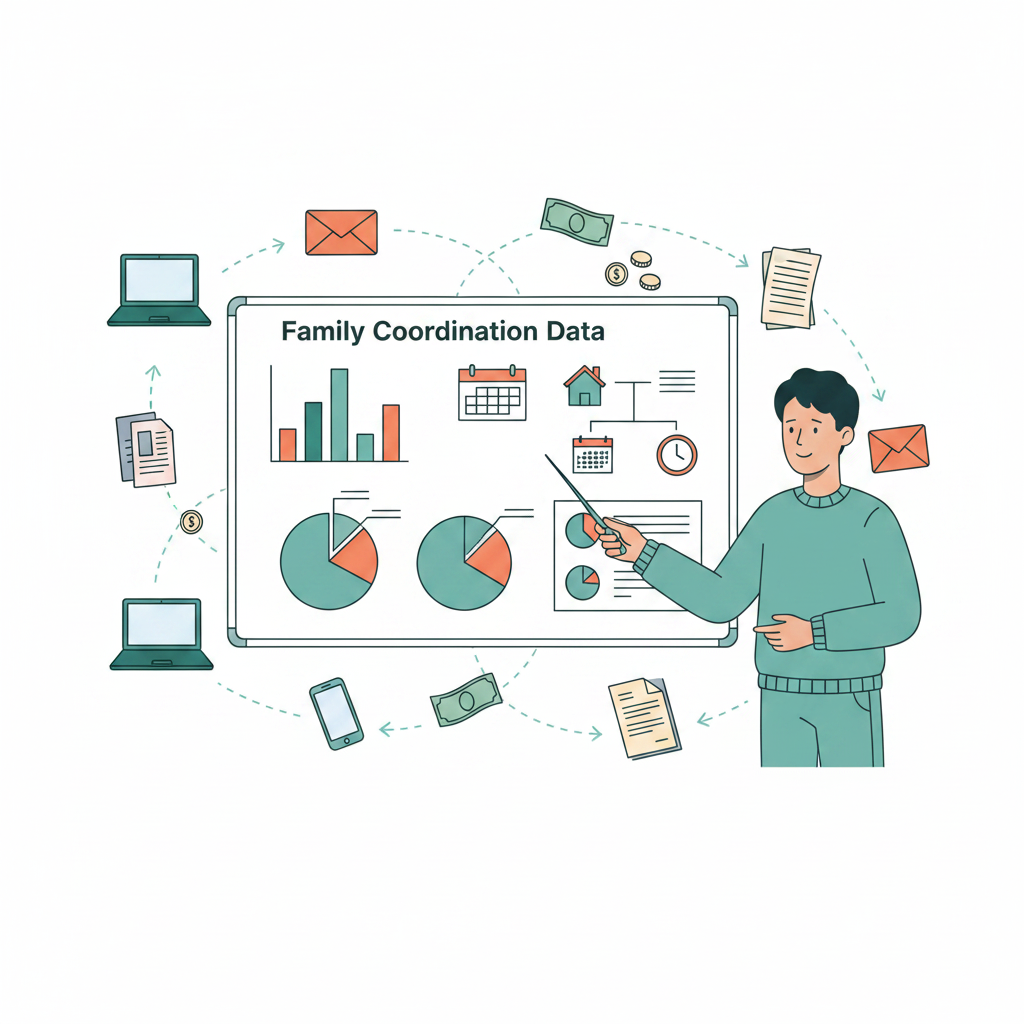
A STEM research team from the University of Nottingham investigated the reality of mental load in UK family life and what it means for how Planily is designed.
A few weeks ago, I had the opportunity to work with a group of STEM students from the University of Nottingham on an industry project facilitated by Practera. Their brief was to research the reality of mental load in UK family life and bring rigour and evidence to the problem Planily is being built to help with.
The team Aslihan Ergor, Judy Bennett, Vedika Wangikar, Sudenaz Ibis, Mohammed Azeez and Liberty Cooper brought a scientific mindset to a problem that most people feel deeply but rarely have the language or data to describe. What follows is a summary of the key findings from their report, and what those findings mean for where Planily is headed.
What is mental load, exactly?
Mental load is not the washing up or the school run. It is the thinking behind all of it.
Researchers describe it as the cognitive work involved in keeping a household running: anticipating what needs to happen before it becomes a problem, identifying the options for dealing with it, deciding between them, and then monitoring that things were actually done. These four stages anticipation, identification, decision-making and monitoring repeat constantly across any given week in a family home.
What makes this kind of labour particularly draining is that it has no natural endpoint. It is invisible, because it happens internally with no visible output. It is boundaryless, because it follows people into work, into evenings, and into sleep. And it is enduring, because caring for others simply does not stop.
The concept has been studied in sociology since the 1980s under names like "cognitive household labour", "invisible labour" and "worry work". It became a more widely discussed topic after a 2017 comic by French cartoonist Emma, which showed how one partner ends up managing the entirety of family life while the other waits to be told what to do. That image resonated with millions of families because it named something they had been living with but had no clear way to articulate.
Who carries the load?
Across the academic literature, there is strong and consistent evidence that mental load is unequally distributed along gender lines. Women perform the majority of the cognitive labour in household and childcare contexts, particularly in the planning, organising and decision-making that underpins everyday family life.
This is not simply explained by income or work patterns. UK-focused research shows that even in dual-income households, women continue to carry a disproportionate share of unpaid domestic coordination, with parenthood often reinforcing more traditional divisions of labour. The imbalance is shaped heavily by gender norms, socialisation, and the negotiation dynamics within individual households.
ONS Time Use data cited in the team's report puts numbers to this: women do nearly 50 minutes more unpaid household work per day than men a gap that widens to over seven hours per week when childcare is included.
Among Planily's own pilot applicants, 93% reported that coordination falls predominantly on one partner rather than being shared, and 64% reported moderate or higher levels of overwhelm.
The insight that matters most
One of the most important findings in the report is also one of the least obvious. The evidence suggests that the supporting partner is typically neither absent nor indifferent. They simply lack visibility. They do not have a clear, shared picture of what is being managed, by whom, and what still needs to be done.
This reframes the problem entirely. Mental load is not just a "coping" issue for an overloaded organiser. It is a coordination failure one where goodwill on both sides is undermined by a lack of shared information.
For Planily, this distinction matters a great deal. The goal is not to build a better tool for the person already managing everything. It is to build a shared coordination layer that gives everyone in the household a clear view of the full picture, so that responsibility can be genuinely shared rather than just nominally agreed.
The households that need this most
The research did not stop at the "typical" two-parent household. The team explored how mental load plays out across dual-income families, co-parenting arrangements and multigenerational households and found that coordination challenges grow significantly as family structures become more complex.
Co-parenting households in particular represent a significant and underserved group. The ONS identifies 1.99 million lone parent families in the UK, the majority of whom are in some form of active co-parenting arrangement. These families face distinct and additional coordination challenges managing logistics across two households, two sets of schedules, and two sets of responsibilities that current tools do not adequately address.
How families are coping today and where tools fall short
The team also mapped the fragmented way most families currently manage coordination: patching together phone calendars, WhatsApp groups and shared Google Calendars without a true shared system. Among Planily's own pilot applicants, the top pain points were coordinating between adults or households, remembering appointments, and last-minute scrambles.
The research found that no single existing tool addresses all of these pain points in one place. Apps designed for school communication excel at broadcasting information but do nothing to help families turn that information into shared, actionable plans. Generic calendar apps store events but do not reduce the thinking work. No UK-native product has been built with mental load as its central problem.
That gap is where Planily sits.
What the research means for Planily
The students' report has already shaped how we talk about the problem, who we are designing for first, and how we frame Planily's role to partners, funders and families.
It reinforces three things we have been building towards from the beginning:
-
Make the invisible visible. Every task, event and routine in Planily has a named owner, so the cognitive work becomes shared and legible rather than quietly carried by one person.
-
Serve the whole household. Planily is not a personal productivity tool. It is a shared coordination system, designed for the household as a unit including co-parents in separate households and extended family members who play an active role.
-
Build for UK family life. The research confirms that no US or generic app has been built around UK school rhythms, terminology and family structures. Planily is.
A huge thank you to the Nottingham team and to Practera for making this collaboration possible. Their report is thorough, well-evidenced and genuinely useful and I am grateful for the care they brought to a problem that so many families already feel every day.
Ready to share the load?
Planily is designed for real UK families. Join the pilot and see the difference.
Apply for the Pilot